Cloud, Security & IT
Cybersecurity for Small Businesses
Digitexa AI helps small and mid-sized businesses find and fix security gaps in their websites, apps, email and cloud accounts, and helps them prepare for frameworks such as SOC 2, ISO 27001, GDPR and Cyber Essentials.
Why do small businesses need cybersecurity?
Small businesses hold customer data, process payments and rely on email and cloud accounts every day, which makes them a regular target for phishing, account takeover and ransomware. Most attacks exploit basic gaps such as missing multi-factor authentication, outdated software or weak email settings. Fixing those basics removes a large share of everyday risk.
What does the cybersecurity service include?
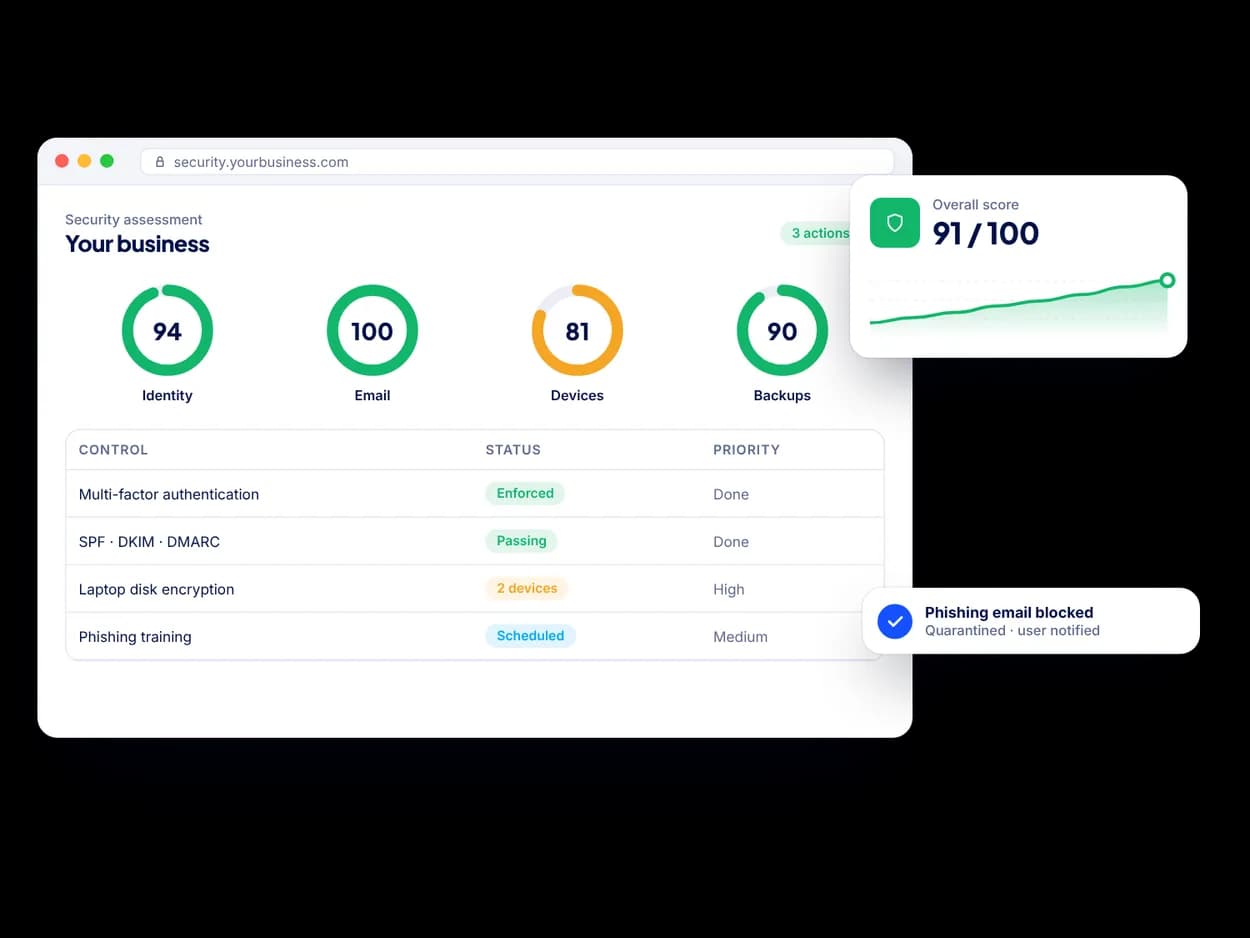
- Security assessment: a review of your websites, apps, cloud accounts, devices and access, with a prioritised list of fixes.
- Vulnerability scanning: automated scans of websites, servers and dependencies, with findings explained in plain English.
- Website and application hardening: secure headers, patched plugins and libraries, least-privilege access and safer configuration.
- Identity and MFA: multi-factor authentication, password managers, single sign-on and removal of unused accounts.
- Email security: SPF, DKIM and DMARC set up correctly to reduce spoofing and improve deliverability.
- Backups: automated, tested backups that are kept separate from the systems they protect.
- Staff awareness: short, practical training on phishing, passwords and safe handling of data.
Can you help us prepare for SOC 2, ISO 27001, GDPR or Cyber Essentials?
Yes, we help you prepare. We map your current controls against the framework, fix technical gaps, write or tidy up policies and gather evidence for your auditor or certification body. We do not certify businesses ourselves; certification or audit is carried out by an accredited third party you choose.
How does the process work?
- Discovery: we learn what systems you use, what data you hold and any customer or regulatory requirements.
- Assessment and scan: we review configurations and run vulnerability scans.
- Prioritised report: findings ranked by risk and effort, so you fix the most important issues first.
- Remediation: we fix the issues with your team or on your behalf.
- Ongoing checks: optional regular scans and reviews to keep security from drifting.
Who is this for?
Small and mid-sized businesses in the US, UK, Middle East and India without a dedicated security team, especially those handling customer data, selling to larger companies that ask security questionnaires, or running WordPress and custom web applications.
Why choose Digitexa AI for cybersecurity?
- Engineers who build websites and apps, so fixes are practical and do not break your systems.
- Plain-English reports aimed at business owners, not just IT staff.
- Honest scope: we tell you what matters now and what can wait.
Ready to talk? Tell us about your project and a senior engineer will reply with next steps, questions and a suggested approach.
Cybersecurity for Small Businesses: FAQs
What are the most important cybersecurity steps for a small business?
Turn on multi-factor authentication for email and cloud accounts, keep software and plugins updated, set up SPF, DKIM and DMARC for your domain, and keep tested backups stored separately. Short staff training on phishing completes a strong baseline.
Can Digitexa AI certify us for ISO 27001, SOC 2 or Cyber Essentials?
No. Certification and audits are carried out by accredited third parties. We help you prepare by closing technical gaps, writing policies and organising the evidence your auditor or certification body will ask for.
What is DMARC and why does it matter?
DMARC is an email setting that, together with SPF and DKIM, tells receiving mail servers how to handle messages that pretend to come from your domain. It reduces spoofing and phishing in your name and can improve the deliverability of your genuine emails.
How often should a small business run a security assessment?
A full review once a year is a sensible baseline, with automated vulnerability scans more frequently. You should also reassess after major changes such as a new website, a cloud migration or a new system that holds customer data.